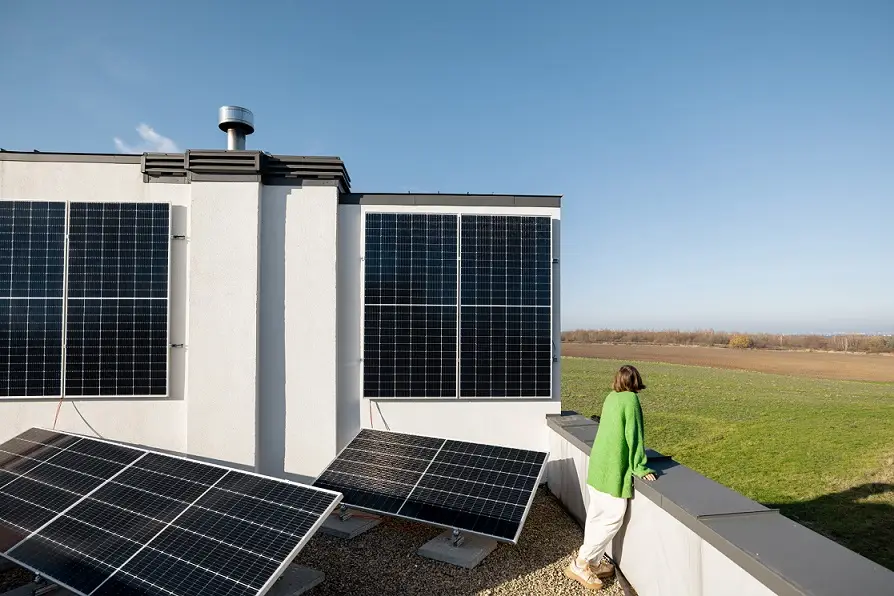

Why Solar Energy is the Future in Pakistan
With electricity costs rising daily, many Pakistanis are searching for a cheap solar system that reduces bills and provides reliable energy. A solar system lowers your electricity cost by cutting the units you buy from the grid. Since 9 February 2026, new connections are on net billing: extra power sent to the grid earns Rs 8.13 a unit, so most of the saving now comes from using your own power.
Today, more homes and businesses are choosing hybrid solar systems with batteries, because a unit you use yourself saves around Rs 60 to 65 while a unit you export earns Rs 8.13. In this guide, we will cover solar panel rates, inverter rates, the solar installation process, comparisons, case studies, and FAQs to help you make the best choice.
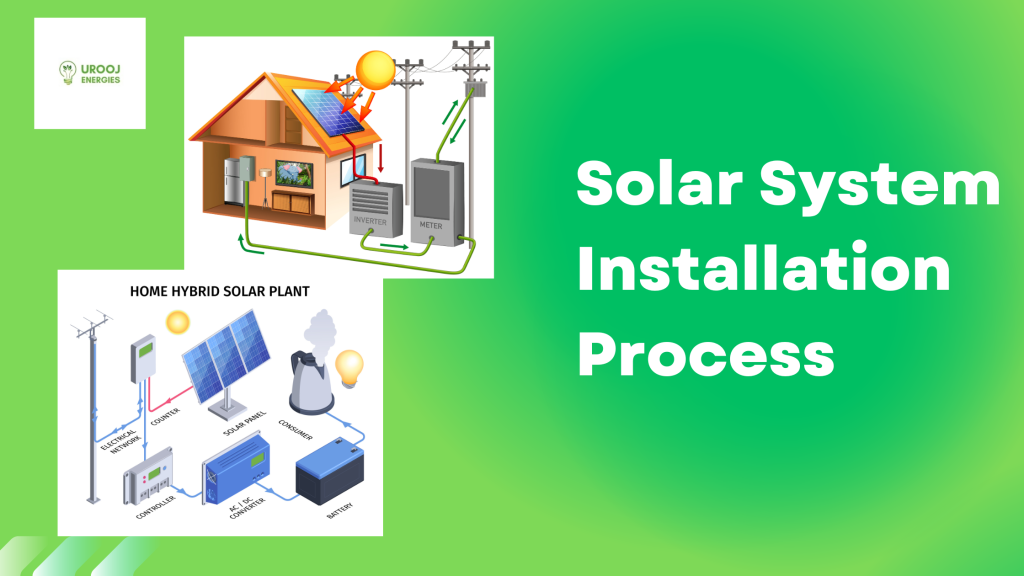
How Does a Solar System Work? (Step-by-Step Process)
- Solar Panels Capture Sunlight
Solar panels absorb sunlight and convert it into DC electricity. - Inverter Conversion
A solar inverter converts DC into AC, which runs your home appliances. - Net Meter & Net Metering
With a Net meter, you can track usage. Under net billing, extra power sent to the grid is bought at Rs 8.13 a unit and credited on your bill. - On-Grid System Integration
In an on-grid solar system, your home remains connected to WAPDA while also using solar energy. - Energy Usage & Savings
You use free solar power during the day, and at night the system automatically switches to grid electricity.
 Result: Maximum savings + reduced dependency on rising unit rates.
Cheap Solar System vs Premium Solar System – Comparison
| Feature | Cheap Solar System | Premium Solar System |
| Cost | Affordable upfront | Higher upfront investment |
| Panel Quality | Tier-2 local panels | Tier-1 imported panels |
| Inverter | Basic Chinese inverter | Premium brands (Huawei, Growatt, Fronius) |
| Lifespan | 8–10 years | 20–25 years |
| Performance | Moderate | High efficiency |
| Net Metering Approval | Sometimes limited | Fully approved & smooth |
| Best For | Small homes, budget users | Businesses, long-term savings |
 Tip: If budget allows, go for a premium on-grid solar system with net metering to enjoy ROI within 3–4 years.
If you want to read about how to choose the Best Solar Company in Faisalabad? Then click here to get information about it.
Case Study – Residential Solar System in Faisalabad
Client: 10 Marla House, Faisalabad
System Size: 10kW On-Grid Solar System
Cost: PKR 1.6 Million
Solar Panel Brand: Jinko N-Type Panels
Inverter: Huawei SUN2000
Result:
- Monthly Bill Before Solar: Rs. 55,000
- Monthly Bill After Solar: Rs. 3,000
- Annual Savings: Rs. 6.24 Lakh
- Payback Time: 3 years
Note: net metering closed to new connections on 9 February 2026. Under net billing the same on-grid system saves less, because exported units now earn Rs 8.13. Ask us for current figures for your home.
 This case study proves that solar power in Pakistan is not just a trend—it’s a profitable long-term investment.
Ongrid Solar System vs Hybrid Solar System
| Feature | Ongrid Solar System | Hybrid Solar System |
| Battery Storage |  No batteries | Includes batteries |
| Cost | Lower | Higher |
| Net Metering | Available | Available |
| Backup in Load Shedding | Not available | Yes, backup available |
| Efficiency | High | Medium (due to battery losses) |
| Best For | Cities with a stable grid | Rural areas with frequent load shedding |
Solar Panel Rates & Inverter Rates in Pakistan
- Solar Panel Rates (per watt)
- Local panels: PKR 32–38/watt
- Tier-1 Imported panels (Longi, Jinko, Canadian): PKR 42–48/watt
- Inverter Rates
- Local inverters: PKR 60,000–150,000
- Premium imported inverters: PKR 180,000–500,000 (depending on kW size)
Always check for warranty, brand authenticity, and NEPRA-approved suppliers before buying.
Do You Need a Net Meter?
- Records the units you import from and export to the grid
- Needed only if you want to export under net billing
- Ensures transparency in billing
- Not needed if your system is set up not to export
Why Solar Energy is Smart in Pakistan
- Lower Monthly Bills
- Store Power for Evenings and Load Shedding
- Increase Property Value
- ROI in 3–4 Years
Ready to switch to clean and affordable solar energy? Urooj Energies provides:
- Cheap solar system packages
- On-Grid & Hybrid Solutions
- Net Metering Approval Support
- Premium Panels & Inverters with Warranty
 Call Now for a Free Consultation and find the best solar power solution in Faisalabad, Pakistan for your home or business!
Frequently Asked Questions
1. What is the difference between an ongrid solar system and a hybrid solar system?
An on-grid system works with WAPDA and does not use batteries, while a hybrid system includes batteries for backup during load shedding.
2. How much does a 10kW solar system cost in Pakistan?
A 10kW ongrid solar system costs around PKR 1.5M–1.8M depending on panel brand and inverter.
3. Can I still get net metering in Faisalabad?
New connections approved after 9 February 2026 are on net billing, which FESCO still approves for homes and businesses. Licences valid before that date keep the old terms for the rest of their term.
4. What is the lifespan of solar panels?
Tier-1 solar panels last 25+ years with minimal efficiency loss.
5. Are cheap solar systems worth it?
Yes, but they are suitable for small homes with low consumption. For businesses, invest in premium systems.
6. What is a Net meter?
A Net meter records both electricity import and export, needed if you want to export under net billing in Pakistan.
7. Do solar panels work at night?
No, solar panels work only during the day. At night, the system uses WAPDA or batteries.
8. How long does solar installation take?
Most residential solar installations take 3–5 days after approval.
9. Will my solar system work during load shedding?
If you install a hybrid solar system, yes. Ongrid systems shut down when WAPDA goes off.
10. Are solar panel rates coming down in Pakistan?
Yes, prices are reducing slightly due to increased imports and competition.